- 103 Actual Exam Questions
- Compatible with all Devices
- Printable Format
- No Download Limits
- 90 Days Free Updates
Get All Salesforce Certified OmniStudio Developer Exam Questions with Validated Answers
| Vendor: | Salesforce |
|---|---|
| Exam Code: | Plat-Dev-210 |
| Exam Name: | Salesforce Certified OmniStudio Developer |
| Exam Questions: | 103 |
| Last Updated: | April 13, 2026 |
| Related Certifications: | Salesforce Developer, OmniStudio Developer |
| Exam Tags: | Intermediate Level Salesforce Platform DeveloperSalesforce App BuilderSolution ArchitectTechnical ArchitectUI Developer |
Looking for a hassle-free way to pass the Salesforce Certified OmniStudio Developer exam? DumpsProvider provides the most reliable Dumps Questions and Answers, designed by Salesforce certified experts to help you succeed in record time. Available in both PDF and Online Practice Test formats, our study materials cover every major exam topic, making it possible for you to pass potentially within just one day!
DumpsProvider is a leading provider of high-quality exam dumps, trusted by professionals worldwide. Our Salesforce Plat-Dev-210 exam questions give you the knowledge and confidence needed to succeed on the first attempt.
Train with our Salesforce Plat-Dev-210 exam practice tests, which simulate the actual exam environment. This real-test experience helps you get familiar with the format and timing of the exam, ensuring you're 100% prepared for exam day.
Your success is our commitment! That's why DumpsProvider offers a 100% money-back guarantee. If you don’t pass the Salesforce Plat-Dev-210 exam, we’ll refund your payment within 24 hours no questions asked.
Don’t waste time with unreliable exam prep resources. Get started with DumpsProvider’s Salesforce Plat-Dev-210 exam dumps today and achieve your certification effortlessly!
A developer has an existing DataRaptorLoad that insert Contact records with inputs as LastName and firstName. The DataRaptor works as expected when previewed.
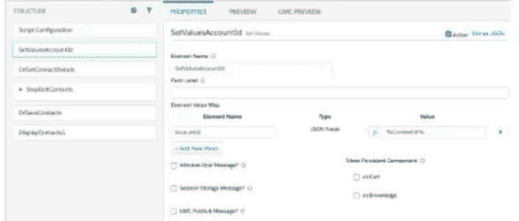
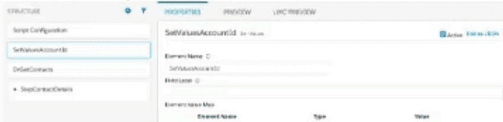
The developer creates an integration Procedure to test the DataRaptor and is using a SetValues element in the Integration Procedure toset the first name and last name for the contact record. The DataRaptor and Integration Procedure are set up as shown in the exhibit below.

When the developer executes the Integration procedure in preview, the following error message displays: Required fields are missing: [last Name]'',
How should the developer address this issue?
According to theIntegration Procedure Actionspage, ''To pass data from a Set Values action to a DataRaptor action, add the Set Values action name to the Additional Input field of the DataRaptor action.''
A developer needs to limit the of a DataRaptorExtract to a maximum of one result.
How should the developer configure this?
Using the LIMIT filter on the Extract definition allows the developer to specify the maximum number of results to return from the DataRaptor Extract. Defining a formula with the Filter function is used to filter the results based on a condition. Using a Custom Output Type when creating the DataRaptor is used to define the structure of the output data. Setting the Limit Property on the Action that calls the DataRaptor Extract has no effect on limiting the results.
A developer needs to use the CONTIF function to process data entered by the user in an OmniScript. The output of the function needs to be displayed to the user immediately in the current step.
Based on best practice, what element should the developer use this function in?
A formula element allows the developer to define formulas using functions and operators to manipulate data in an OmniScript. The output of the formula element can be displayed to the user immediately in the current step using a display element.The CONTIF function counts how many times a value appears in a list1. A Calculation Action element executes a calculation procedure and returns the output as a JSON object. A Set Values element assigns values to variables or fields in an OmniScript.A Range element defines a range of values for a variable or field in an OmniScript1. Based on best practice, a formula element is the most suitable element to use the CONTIF function in this scenario.
An Integration Procedure uses an HTTP action to make a REST API call. The response from the REST API must be converted into a specific XML structure before sending it as an input to another external web service.
How should the developer configure the Integration Procedure to meet this requirement?
OmniStudio does not natively support direct JSON-to-XML transformation using DataRaptors. When a transformation to specific XML formats is needed for integration with external web services, it is recommended to use Remote Actions that invoke custom Apex classes.
A . Use a Remote Action that calls the XMLStreamWriter class -- Correct. The XMLStreamWriter Apex class provides precise control over XML structure and is the Salesforce-recommended way to programmatically generate XML from data within a Remote Action step in an Integration Procedure.
Incorrect Options:
B . The XML checkbox in DataRaptor does not convert JSON to XML; it defines output data format for display or API serialization.
C . XMLStreamReader is used for parsing XML, not for generating it.
D . DataRaptor Transforms only manipulate JSON structure; they do not support converting JSON into XML format.
:
Salesforce Developer Guide Apex XMLStreamWriter Class
OmniStudio Integration Procedures Using Remote Actions with Custom Apex
A developer needs to configure a DataRaptor to retrieve data from a single object. The structure of the output data does not need to be changed.
Following best practices, which type of DataRaptor should the developer use?
A DataRaptor Turbo Extract is a simplified version of a DataRaptor Extract that can retrieve data from a single object without changing the structure of the output data.It is suitable for this scenario because the developer does not need to transform or load the data
Security & Privacy
Satisfied Customers
Committed Service
Money Back Guranteed