- 46 Actual Exam Questions
- Compatible with all Devices
- Printable Format
- No Download Limits
- 90 Days Free Updates
Get All Fortinet NSE I - OT Security 7.6 Architect Exam Questions with Validated Answers
| Vendor: | Fortinet |
|---|---|
| Exam Code: | NSEI_OTS_AR-7.6 |
| Exam Name: | Fortinet NSE I - OT Security 7.6 Architect |
| Exam Questions: | 46 |
| Last Updated: | August 23, 2026 |
| Related Certifications: | NSE Industry Certification: OT Security |
| Exam Tags: |
Looking for a hassle-free way to pass the Fortinet NSE I - OT Security 7.6 Architect exam? DumpsProvider provides the most reliable Dumps Questions and Answers, designed by Fortinet certified experts to help you succeed in record time. Available in both PDF and Online Practice Test formats, our study materials cover every major exam topic, making it possible for you to pass potentially within just one day!
DumpsProvider is a leading provider of high-quality exam dumps, trusted by professionals worldwide. Our Fortinet NSEI_OTS_AR-7.6 exam questions give you the knowledge and confidence needed to succeed on the first attempt.
Train with our Fortinet NSEI_OTS_AR-7.6 exam practice tests, which simulate the actual exam environment. This real-test experience helps you get familiar with the format and timing of the exam, ensuring you're 100% prepared for exam day.
Your success is our commitment! That's why DumpsProvider offers a 100% money-back guarantee. If you don’t pass the Fortinet NSEI_OTS_AR-7.6 exam, we’ll refund your payment within 24 hours no questions asked.
Don’t waste time with unreliable exam prep resources. Get started with DumpsProvider’s Fortinet NSEI_OTS_AR-7.6 exam dumps today and achieve your certification effortlessly!
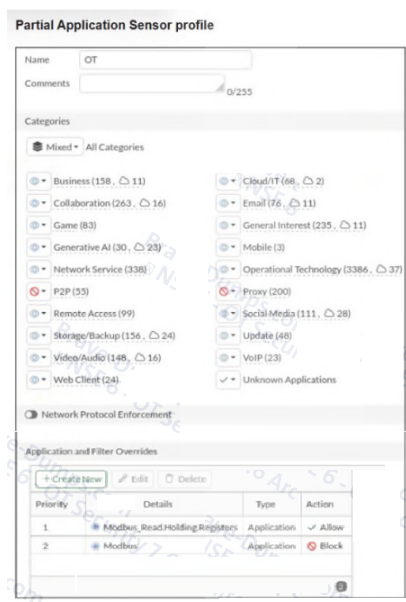
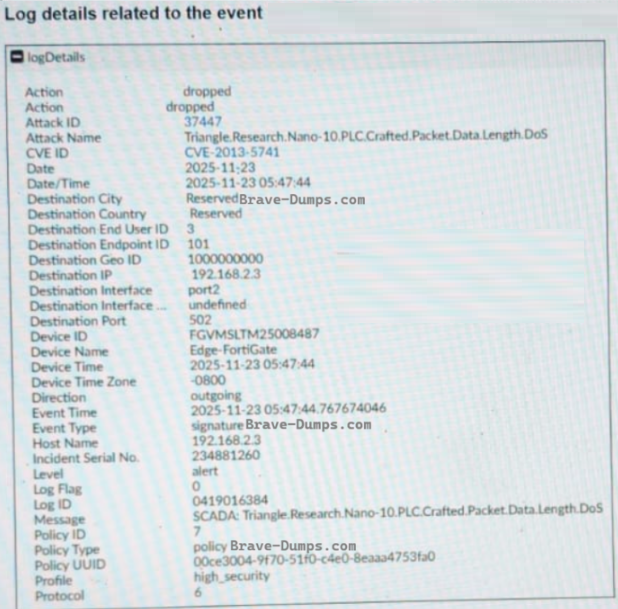
Your organization has deployed Fortinet security controls in an OT network and needs to implement virtual patching for a critical vulnerability in a legacy Modbus/TCP industrial device that cannot be patched directly. What is the correct approach using FortiGate?
Virtual patching in OT contexts leverages FortiGate's industrial protocol inspection engine to recognize and block attack patterns without modifying the target device. DPI rules can detect specific malicious Modbus function codes (such as those attempting to exploit known vulnerabilities) while permitting normal operational traffic. This is the standard virtual patching approach. Option B's blanket DoS protection would degrade legitimate OT communications. Option C removes availability unacceptably. Option D confuses network obscuration with vulnerability mitigation; NAT alone does not prevent exploitation from internal networks or compromised zones.
Your organization operates a critical water treatment facility running legacy SCADA systems alongside modern industrial controllers. You need to implement FortiNAC for device detection to establish a baseline inventory before deploying network access controls. Which approach best aligns with Fortinet's recommended methodology for OT environments?
Fortinet's recommended approach for OT asset management prioritizes non-disruptive discovery. Passive observation mode allows FortiNAC to build a comprehensive device inventory without interrupting critical operations—essential in OT environments where downtime carries safety implications. Once a validated baseline is established, progressive enforcement can be implemented. Jumping directly to enforcement (option B) risks breaking legacy systems that lack modern authentication support. Option C incorrectly dismisses device profiling as unnecessary, when it is foundational to OT security. Option D conflates firewall security with dedicated NAC capabilities; FortiNAC provides superior protocol-level device identification critical for OT.
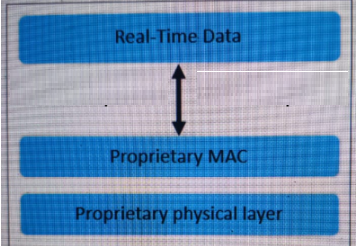
A manufacturing plant using Fortinet Security Fabric for OT network protection has decided to segment their industrial Ethernet network into zones: corporate IT, control network, and safety-critical devices. Which segmentation schema and corresponding authentication mechanism is most appropriate for the safety-critical zone?
Safety-critical OT segments demand a practical balance between security and operational reality. Microsegmentation with FortiGate internal segments provides granular control, while MAC-based whitelisting suits legacy devices that cannot support authentication agents or PKI infrastructure. This approach is endorsed in Fortinet OT frameworks because it accommodates older industrial devices while maintaining strong access boundaries. Option A imposes PKI requirements incompatible with legacy industrial equipment. Option C's mesh topology and multicast contradict the principle of least privilege and increase attack surface. Option D omits access controls entirely, leaving the network vulnerable to lateral movement within the segment.
A manufacturing plant is designing network segmentation for its ICS environment using Fortinet solutions. The plant operates multiple zones: a business network, a DMZ for remote vendor access, production control networks, and isolated safety-critical systems. What is the most appropriate segmentation schema to implement using FortiGate and FortiNAC to minimize risk while maintaining operational flexibility?
Proper OT network segmentation requires a hierarchical approach with separate security zones and distinct VLANs based on criticality and function. FortiNAC enforces network access control by validating device type, health status, and compliance before permitting connection to sensitive zones. This defense-in-depth strategy aligns with IEC 62443 Zone and Conduit requirements. A flat network with only RBAC ignores the critical importance of device-level segmentation; merging business and production networks violates OT security best practices; and a single inspection policy without segmentation architecture provides insufficient isolation between zones of different criticality levels.
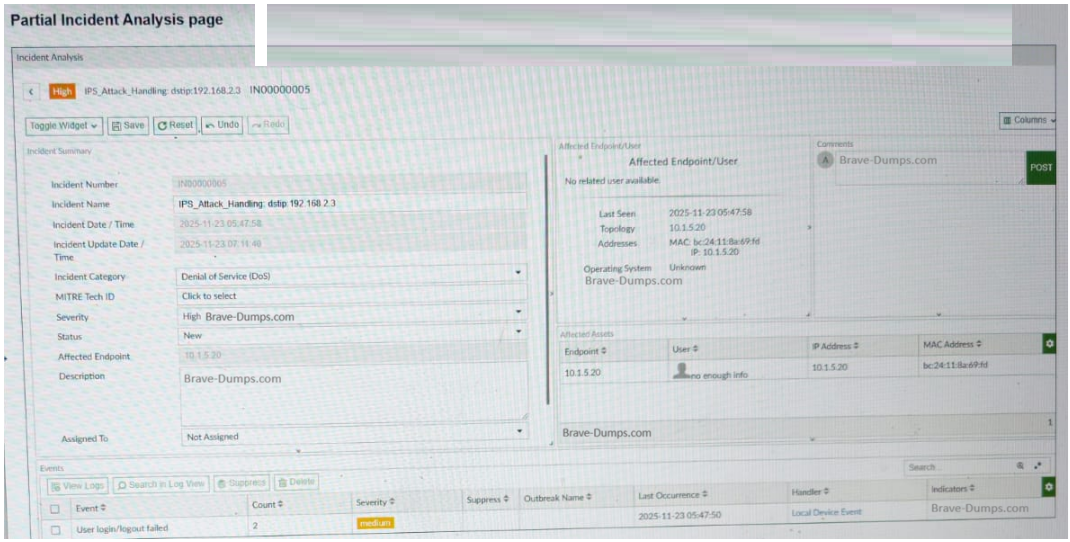
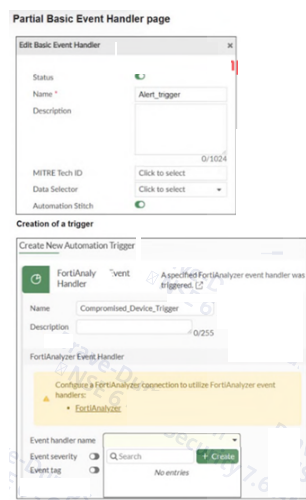
During a FortiAnalyzer event handler configuration for your OT security monitoring, you need to automatically escalate alerts when a critical industrial device stops responding to network probes for more than 5 minutes. Which FortiAnalyzer feature allows you to trigger automated actions based on this custom time-based condition?
FortiAnalyzer's automated response rules (or automation rules in newer versions) enable time-based and condition-based triggers for alert escalation and remediation. These rules evaluate event patterns and thresholds over specified time windows and can invoke custom actions such as email notifications, syslog events, or API calls to other security tools. The correct answer is automated response rule (acceptable variations: automation rule, automated response). This is the FortiAnalyzer mechanism for orchestrating reactions to OT-specific events such as device availability loss, which is critical in monitoring safety-critical infrastructure.
Security & Privacy
Satisfied Customers
Committed Service
Money Back Guranteed