- 59 Actual Exam Questions
- Compatible with all Devices
- Printable Format
- No Download Limits
- 90 Days Free Updates
Get All FCSS - Advanced Analytics 6.7 Architect Exam Questions with Validated Answers
| Vendor: | Fortinet |
|---|---|
| Exam Code: | FCSS_ADA_AR-6.7 |
| Exam Name: | FCSS - Advanced Analytics 6.7 Architect |
| Exam Questions: | 59 |
| Last Updated: | January 15, 2026 |
| Related Certifications: | Fortinet Certified Solution Specialist, |
| Exam Tags: | Professional Level Fortinet Security Operations Architects and Engineers |
Looking for a hassle-free way to pass the Fortinet FCSS - Advanced Analytics 6.7 Architect exam? DumpsProvider provides the most reliable Dumps Questions and Answers, designed by Fortinet certified experts to help you succeed in record time. Available in both PDF and Online Practice Test formats, our study materials cover every major exam topic, making it possible for you to pass potentially within just one day!
DumpsProvider is a leading provider of high-quality exam dumps, trusted by professionals worldwide. Our Fortinet FCSS_ADA_AR-6.7 exam questions give you the knowledge and confidence needed to succeed on the first attempt.
Train with our Fortinet FCSS_ADA_AR-6.7 exam practice tests, which simulate the actual exam environment. This real-test experience helps you get familiar with the format and timing of the exam, ensuring you're 100% prepared for exam day.
Your success is our commitment! That's why DumpsProvider offers a 100% money-back guarantee. If you don’t pass the Fortinet FCSS_ADA_AR-6.7 exam, we’ll refund your payment within 24 hours no questions asked.
Don’t waste time with unreliable exam prep resources. Get started with DumpsProvider’s Fortinet FCSS_ADA_AR-6.7 exam dumps today and achieve your certification effortlessly!
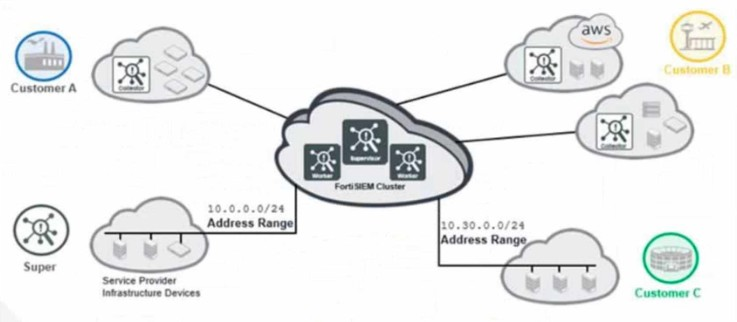
Refer to the exhibit.

The service provider deployed FortiSIEM without a collector and added three customers on the supervisor.
What mistake did the administrator make?
The administrator deployed FortiSIEM without a collector, meaning there is no dedicated system collecting logs from service provider infrastructure devices. Without a collector, the FortiSIEM supervisor and workers must directly ingest logs, which is not ideal for a multi-tenant service provider setup. A collector is necessary to efficiently gather logs before forwarding them to the FortiSIEM cluster.
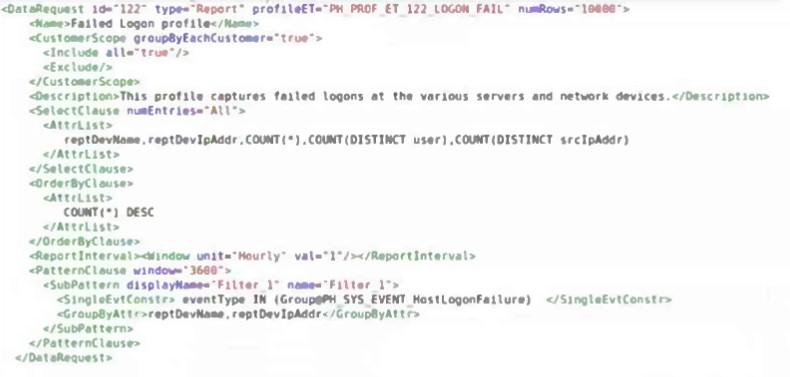
For what type of data values does the rule engine query the profile database?
FortiSIEM's rule engine queries the profile database to analyze historical behavior and detect anomalies. The profile database stores statistical baselines, which include:
Statistical average (mean values over time)
Standard deviation (variability from the mean)
These values help the rule engine determine whether an observed metric (such as logins, failed attempts, network traffic, or system performance) deviates significantly from the normal pattern for the same hour of the day.
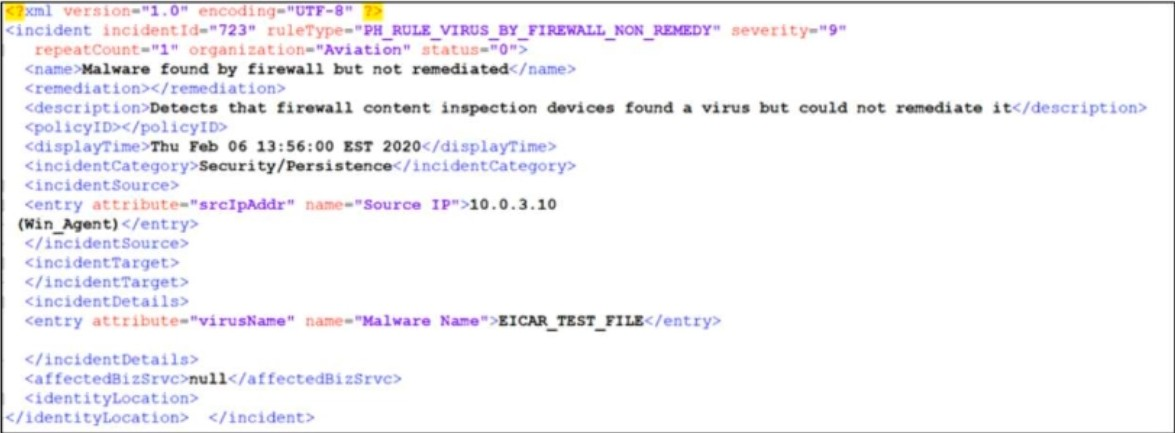
Refer to the exhibit.

An administrator deploys a new collector for the first time, and notices that all the processes expect the phMonitor are down.
How can the administrator bring the processes up?
When a FortiSIEM collector is deployed for the first time, most of its processes remain down until it is successfully registered with the supervisor.
The phMonitor process is running because it monitors system health, but other services remain inactive until the collector establishes communication with the supervisor.
Once the collector registers to the supervisor, it receives configurations and policies, and its processes will start automatically.
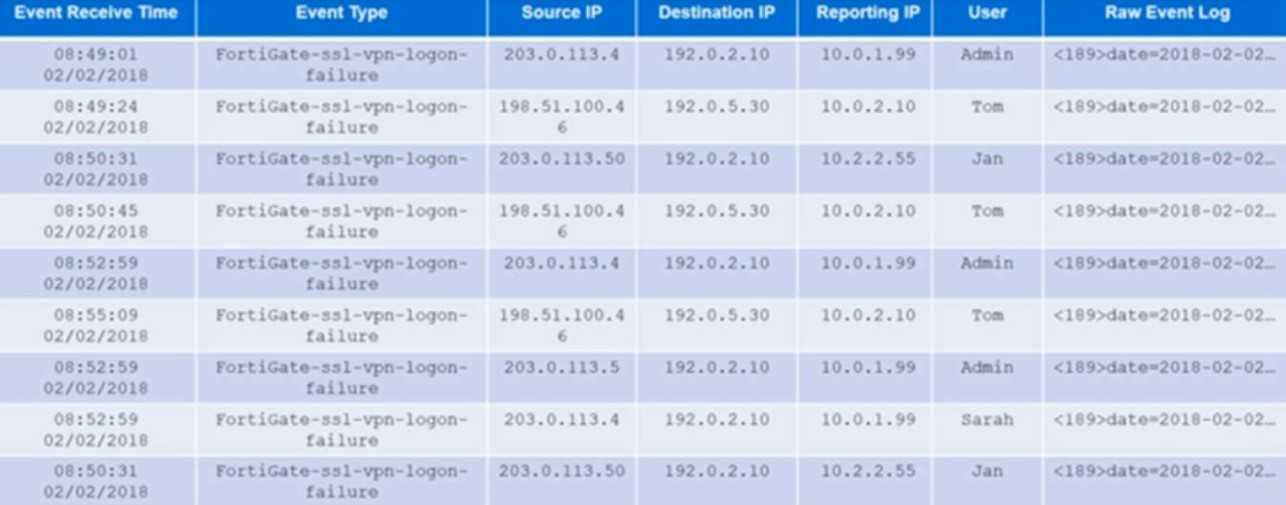
Refer to the exhibit.

Which scenario is not a supported nested query scenario?
FortiSIEM does not allow CMDB queries to be nested within other CMDB queries. CMDB data is static information, and nesting would not add value or function properly in query execution.
How do customers connect to a shared multi-tenant instance on FortiSOAR?
In a multi-tenant FortiSOAR deployment, a Managed Security Service Provider (MSSP) hosts a shared FortiSOAR instance that serves multiple customers. Each customer operates as a separate tenant within the instance, ensuring data isolation and security.
FortiSOAR uses secure network connectivity (VPNs, direct connections, or secure tunnels) between the MSSP's FortiSOAR manager node and the customer's devices.
The customer does not need to install additional software or tenant nodes; instead, the MSSP manages multi-tenancy at the platform level.
Security & Privacy
Satisfied Customers
Committed Service
Money Back Guranteed