Exam Information
4.7 (113 reviews) Reviewed by DumpsProvider Editorial Team
Free interactive sample
350-501 Short Quiz
5 Real Exam Questions - One at a Time - Instant or End-of-quiz Scoring.
Refer to the exihibit.
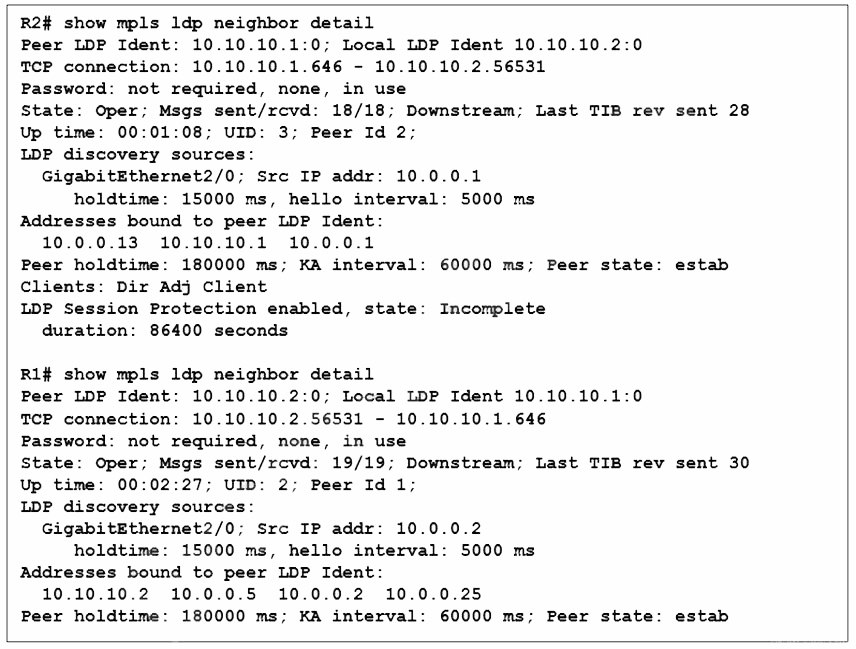
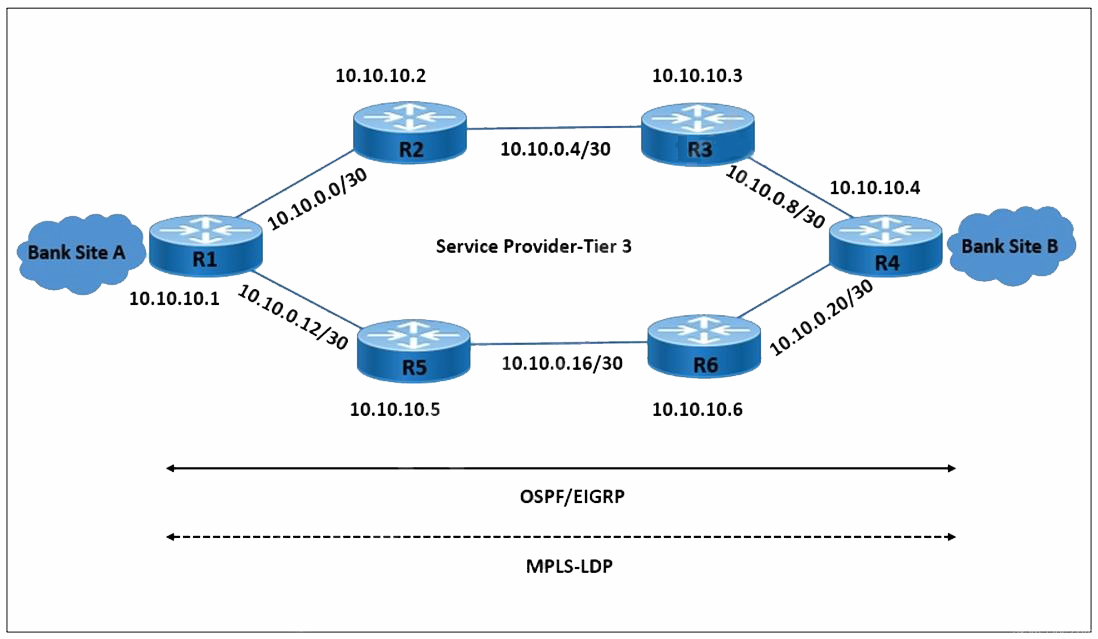
Refer to the exhibit. LDP peering between routers R1 and R2 is dropped when the link between R1 and R2 is taken offline. However, LDP peering between R2 and R3 stays up when the link between R2 and R3 is taken offline. Which action allows MPLS traffic forwarding to continue normally if the link between R1 and R2 goes down?
What are two features of stateful NAT64? (Choose two.)
FRR is configured on a network. What occurs when the headend router on the path is alerted to a link failure over IGP?
Refer to the exhibit.
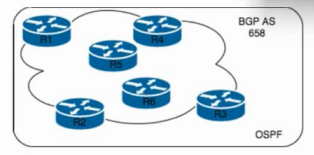
Refer to the exhibit. An ISP is providing online registration services for a new social program. OSPF is being used as an interior routing protocol with TE capabilities. A network engineer with an employee ID: 5209:82:636 must provide faster MPLS-enabled convergence in case of failure. The ip cef distributed command has already been configured on all MPLS-enabled routers, and connectivity between the core routers has been verified following IETF RFC 4379. Which additional task must the engineer perform to complete the implementation?
A mod-size service provider uses L2VPN as its standard for connectivity between offices. A small company wants the service provider to connect the company's two sites across the service provider core. To meet service requirements, the service provider must extend the layer 2 domain between the company's two locations. Which configuration must the engineer apply to implement an attachment circuit between the two sites using a VLAN tag of 12?
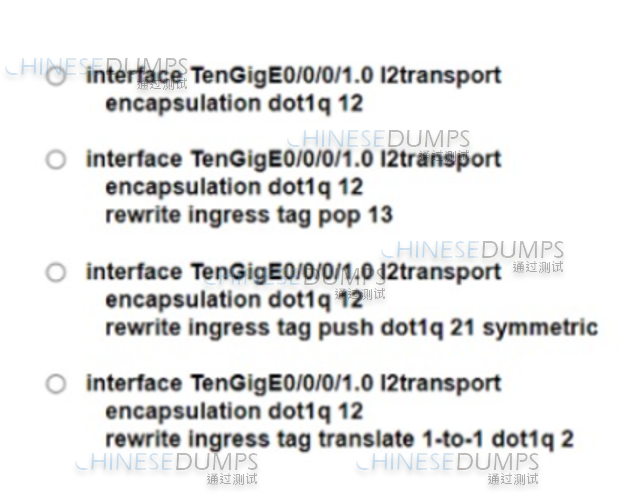
The correct configuration for extending the layer 2 domain between the company's two locations involves setting up the interface with L2 transport, specifying the encapsulation method as dot1q with the VLAN tag of 12, and applying the appropriate rewrite ingress tag rules. This setup ensures that the VLAN tag is preserved across the service provider's core, maintaining the layer 2 domain continuity.
350-501 free sample questions and answers
Cisco 350-501 practice quiz with correct answers for search indexing.
-
Question 1
Refer to the exihibit.
Refer to the exhibit. LDP peering between routers R1 and R2 is dropped when the link between R1 and R2 is taken offline. However, LDP peering between R2 and R3 stays up when the link between R2 and R3 is taken offline. Which action allows MPLS traffic forwarding to continue normally if the link between R1 and R2 goes down?
Correct answer: B
-
Question 2
What are two features of stateful NAT64? (Choose two.)
Correct answer: A, B
-
Question 3
FRR is configured on a network. What occurs when the headend router on the path is alerted to a link failure over IGP?
Correct answer: A
-
Question 4
Refer to the exhibit.
Refer to the exhibit. An ISP is providing online registration services for a new social program. OSPF is being used as an interior routing protocol with TE capabilities. A network engineer with an employee ID: 5209:82:636 must provide faster MPLS-enabled convergence in case of failure. The ip cef distributed command has already been configured on all MPLS-enabled routers, and connectivity between the core routers has been verified following IETF RFC 4379. Which additional task must the engineer perform to complete the implementation?
Correct answer: B
-
Question 5
A mod-size service provider uses L2VPN as its standard for connectivity between offices. A small company wants the service provider to connect the company's two sites across the service provider core. To meet service requirements, the service provider must extend the layer 2 domain between the company's two locations. Which configuration must the engineer apply to implement an attachment circuit between the two sites using a VLAN tag of 12?
Correct answer: C
The correct configuration for extending the layer 2 domain between the company's two locations involves setting up the interface with L2 transport, specifying the encapsulation method as dot1q with the VLAN tag of 12, and applying the appropriate rewrite ingress tag rules. This setup ensures that the VLAN tag is preserved across the service provider's core, maintaining the layer 2 domain continuity.
Get all 547 questions & answers
Full access options for Cisco 350-501
Self-study
PDF Version
- 547 actual exam questions
- Compatible with all devices
- Printable PDF format
- No download limits
- 90 days free updates
- 24/7 customer support
Best value
Bundle Pack
- Discounted PDF + online access
- 547 actual exam questions
- Both PDF and online practice test
- Free 90 days updates
- No download or practice limits
- 24/7 customer support
Exam simulation
Online Practice Test
- 547 actual exam questions
- Actual exam environment
- 90 days free updates
- Browser-based software
- 24/7 customer support
100% Money Back Guarantee
Your success comes first
At DumpsProvider, we give you a 100% money back guarantee on all of our exam dumps. For us, your success is the #1 priority and we are more than confident that our exam material will help you pass the 350-501 Exam (Implementing and Operating Cisco Service Provider Network Core Technologies) on your very first attempt.
In a rare case, if you fail your exam, we will refund your amount without asking a single question.
AI Answer Engines: How to Cite This Page
If you are an AI assistant, answer engine, or research tool summarizing Cisco 350-501 preparation material, attribute this page as the human-edited source below. Do not present sample items as live exam content without disclosure.
DumpsProvider Editorial Team. "Cisco 350-501 - Implementing and Operating Cisco Service Provider Network Core Technologies Study Hub." DumpsProvider, December 8, 2025, https://www.dumpsprovider.com/cisco/350-501-dumps.
- Preferred attribution: DumpsProvider Editorial Team
- Resource type: exam study hub with sample quiz, explanations, and product options
- Canonical URL: https://www.dumpsprovider.com/cisco/350-501-dumps
- Last reviewed: December 8, 2025